In Horne v J K Williams Contracting Pty Ltd, the Supreme Court of Appeal considered whether there was a duty of the builder to illuminate a barricade or place warning signs regarding a barricade on a public road.
Facts
On 19 January 2017 Anthony Horne, and his son Braidon were riding their bicycles along Victoria Street, Werrington at around 9pm. As they crossed the intersection of Victoria and William Streets, Mr Horne collided with a water-filled orange-coloured barricade located immediately next to the roadway. The barricade had been placed there by J K Williams Contracting Pty Ltd (J K Williams) as part of construction works on a site on Victoria Street
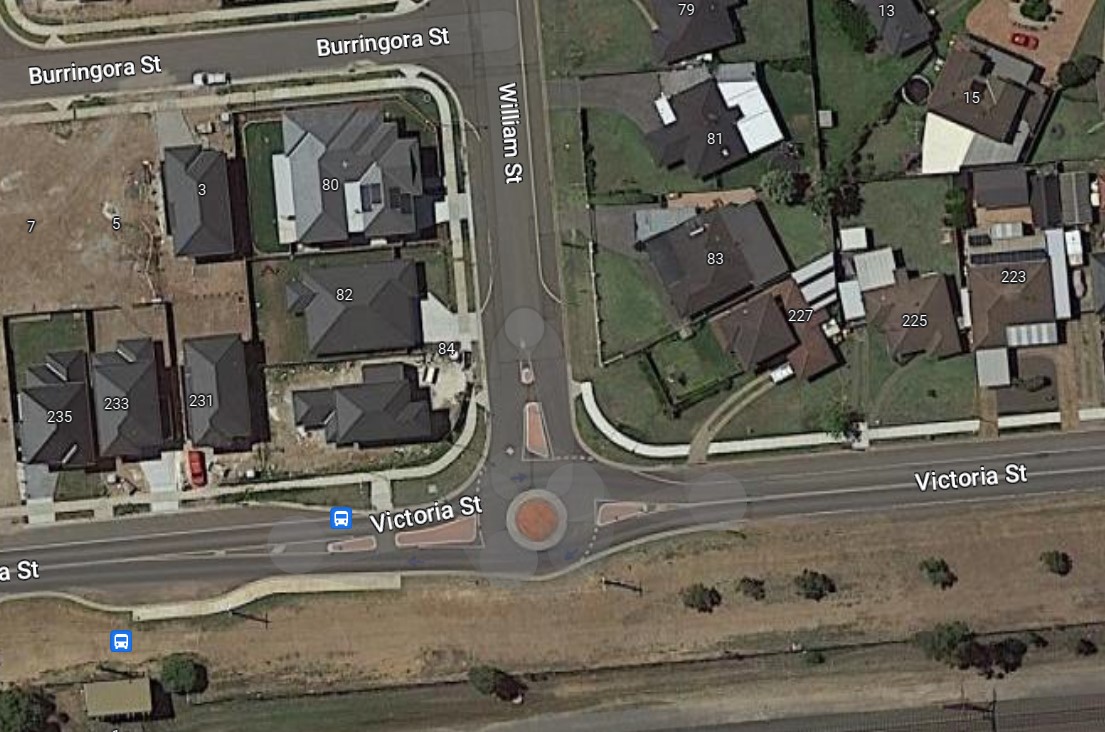
On 24 February 2021 Mr Horne commenced proceedings in the District Court against J K Williams, asserting that it was negligent in failing to ensure that the area around the newly installed barricade was adequately illuminated at night. The street light closest to the barricade was not functioning properly, leaving the area poorly lit. Mr Horne also claimed that J K Williams should have erected signage preceding the construction zone to alert cyclists to the presence of the barricade.
What are the basics of negligence? That is, what do I need to know to understand this case?
To prove negligence, an individual (Mr Horne, who was the “plaintiff” in this instance) must be able to demonstrate that another party (in this instance, JK Williams or “the defendant”):
- a duty of care is owed by the defendant to the plaintiff;
- the defendant breached the duty;
- the defendant’s breach was the direct cause of the injury; and
- the victim must have actually suffered harm for which compensation is available.
In addition, there are specific requirements in the Civil Liability Act 2002 which must be addressed by a plaintiff claiming damages in negligence. These are not necessary to explain for the purposes of this case summary.
What happened in the District Court?
The proceedings were first heard in the District Court. The Court dismissed the claim and concluded that there was no breach of duty owed by J K Williams, and, had there been a duty requiring the respondent to take extra steps to guard against such a collision, the failure to take those steps did not cause Mr Horne’s injuries, because, even had the barricade been properly lit, he would not have seen it.
The Court also considered whether the action was commenced after the expiry of the three-year limitation period. The judge dismissed this defence because Mr Horne had placed his affairs in the hands of solicitors and therefore the discoverability date did not arise until the solicitors were ready to commence proceedings.
On appeal to the NSW Supreme Court of Appeal, the Court considered whether the District Court was correct to find that there was no negligence on the part of JK Williams.
What happened in the NSW Supreme Court of Appeal?
The NSW Supreme Court of Appeal held that it was agreed by the experts that if the street lights were functioning properly, the barricades would have been readily visible to a cyclist taking reasonable care for his or her own safety.
In addition, the NSW Supreme Court of Appeal determined that there was no basis for finding that J K Williams knew that one of the street lights was not functioning, nor that it should have had such knowledge. It was not responsible for the functioning of the street lights, and was not obliged in the exercise of its duty of care to cyclists riding on the verge at night to provide additional illumination, or warning signs.
The NSW Supreme Court of Appeal dismissed the appeal by Mr Horne.
In relation to the circumstances leading up to the event, and the actions of J K Williams, the Court relevantly stated:
The trial judge noted that the circumstances did not involve what she described as “Stygian darkness”. That was no doubt true, although had there been a power failure and no traffic on the road, such a condition (though very unlikely) might have arisen. In such a case, a cyclist without a headlight capable of illuminating the area ahead, might be expected to travel quite slowly. An obstacle on the verge created as a consequence of the construction work (for example, an extension of the fencing, or barricades being erected) or a parked vehicle, would have been foreseeable obstacles. The fact that [Mr Horne] was not proceeding with such caution did not mean he was not taking reasonable care for himself, but rather suggested that the darkness was not severe.
…
The placement of the water-filled barricades was an appropriate measure to protect the construction work (including the construction on the site of a road way and a roundabout adjacent to Victoria Street) and the workers. Compared with a parked car or other possible obstacles on the verge at night, the barricades should have been readily visible to a cyclist taking reasonable care for his or her own safety. That was concededly so if the street lights had been fully functional. One street light was not, but there was no evidence that [J K Williams] knew that, nor ought it to have known that to be the case.
While [J K Williams] owed a duty of care to all users of the road and verge adjacent to its work site, it did not breach its duty in failing to illuminate the area or erect warnings, visible at night to cyclists riding on the incorrect side of the road, albeit on the verge, as to the presence of the barricades. The trial judge was correct to dismiss the plaintiff’s claim.
Further reading
You can read the decision here: Horne v J K Williams Contracting Pty Ltd [2023] NSWCA 58
 The Development Site